

↓
 

Montgomery Land Surveying

Land Surveying in Montgomery, Montgomery County, Alabama

Montgomery Land Surveying
  • Home
  • ALTA Survey
  • Boundary Surveying
  • Construction Survey
  • Drone LiDAR Mapping
  • Elevation Certificate
  • Land Surveying
  • Topographic Survey
  • Civil Engineering
    • Expert Witness
    • Elevation Certificate – LOMA
  • Contact Us
  • Blog
Home - Page 3 << 1 2 3 4 5 … 13 14 >>

Post navigation

← Older posts
Newer posts →

Why a Licensed Land Surveyor Reviews Old Fence Lines

Montgomery Land Surveying Posted on August 28, 2026 by MontgomeryLSAugust 26, 2026
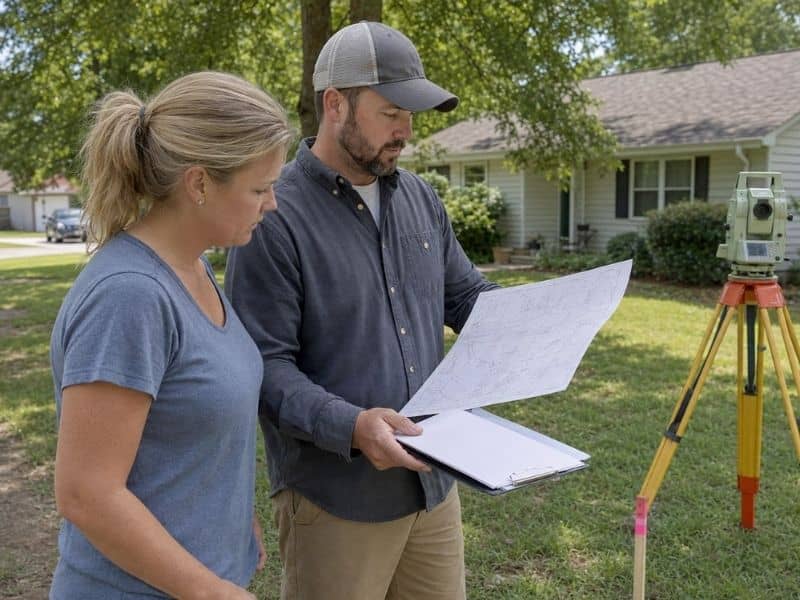
Licensed land surveyor using surveying equipment near an existing fence in Montgomery Alabama

In older Montgomery neighborhoods, it’s common to find a fence that’s been standing for decades, sometimes longer than the current owner has lived on the property. Neighbors often treat that fence as the property line without a second thought. But a licensed land surveyor won’t make that same assumption. Old fences can hold real clues about a property’s history, yet they don’t always sit where the legal boundary actually runs. Knowing the difference matters more than most homeowners realize.

Why an Old Fence Line Is Evidence, Not Automatically the Boundary

A fence that’s been in place for thirty or forty years tells a story. It shows where someone, at some point, decided the land was used or divided. That kind of long-standing physical evidence is worth paying attention to.

But a fence being old doesn’t make it correct. People build fences based on where a tree line felt convenient, where a slope made digging easier, or simply where the last owner said the line was. None of those reasons have anything to do with the legal description recorded at the courthouse. A surveyor treats the fence as one clue among several, not as proof on its own.

How Surveyors Compare Historic Fence Lines With Deeds and Plats

Once a surveyor has measured the fence,they pull the recorded deed, the subdivision plat if one exists, and any earlier survey records tied to the property. These documents describe the boundary in legal terms, often using distances, bearings, and references to physical monuments set decades ago.

The surveyor then lays the fence location over that recorded description. Sometimes it lines up closely. Other times it doesn’t. A few feet of difference might not seem like much, but on a small older lot, it can matter quite a bit. The goal at this stage isn’t to guess who’s right. It’s to see clearly whether the fence supports the recorded line or contradicts it.

What Fence Posts, Corners, and Alignment Changes Can Reveal

A trained eye can pick up on details that most people would walk right past. An old corner post, sunk deeper and weathered more than the rest of the fence, might mark where an original boundary corner was set. A sudden shift in direction partway down a fence line can suggest the fence was rebuilt or extended at a different time than the rest.

Surveyors also look for remnants: a rusted section of wire half buried in the yard, a row of old post holes running a slightly different path than the current fence. These fragments help reconstruct how the land was actually used over time. They don’t automatically confirm the boundary, but they add pieces to the puzzle.

Why a Fence May Have Moved While the Recorded Boundary Did Not

Boundaries don’t shift on their own. Fences do, all the time, and usually for reasons that have nothing to do with property lines. A section rots and gets replaced a few feet over because that’s where the ground was firmer. A driveway gets widened and the fence gets moved to make room. A farmer decides it’s easier to mow a straight line instead of following an odd angle in the original survey.

Over several decades, these small practical decisions can add up. What started as a fence built close to the true line can end up sitting well off from it, even though the recorded boundary hasn’t changed at all. This is one of the more common surprises homeowners run into once a survey is finally done.

How a Licensed Land Surveyor Resolves Conflicting Boundary Evidence

When the fence, the deed, and the physical monuments don’t all agree, a surveyor has to weigh each piece of evidence and decide how much it should count. Recorded monuments still standing in the ground usually carry the most weight, since they were placed at the time the boundary was originally set. Measurements from adjoining properties, older survey plats, and even testimony about long-term occupation can all factor into the decision as well.

This isn’t a quick judgment call. Surveyors are trained to follow specific legal principles for resolving these conflicts, and a fence that’s out of line with the deed doesn’t automatically lose. Sometimes long-term use of land, even land that technically belongs to a neighbor, can affect where a boundary is legally recognized to sit. Working through that takes patience and a clear head, not a quick glance at a fence.

Frequently Asked Questions

Does an old fence prove where the property line is? 

No. An old fence can support boundary evidence, but its age alone doesn’t establish the legal line. A surveyor still has to compare it against recorded deeds and other evidence.

Why would a land surveyor measure a fence that is no longer in use? 

Even an abandoned or partial fence can reveal how the land was historically divided or occupied, which helps a surveyor piece together the property’s boundary history.

Can an old fence be located differently from the recorded property boundary? 

Yes, and this happens often. Repairs, landscaping changes, and everyday practical decisions can shift a fence’s location over time while the recorded boundary stays exactly where it was originally set.

What happens if a fence conflicts with a deed or survey plat? 

The surveyor evaluates all available evidence, including monuments, measurements, and adjoining property records, to determine which pieces best support the true legal boundary.

Do surveyors consider fence remnants when determining a boundary? 

Yes. Old posts, buried wire, and shifts in alignment can all provide useful clues about how a property’s boundary and land use looked in the past.
Posted in land surveying | Tagged Land Surveying

When a Boundary Survey Price Looks Low, What Might Be Missing?

Montgomery Land Surveying Posted on August 21, 2026 by MontgomeryLSAugust 19, 2026
Surveyor reviewing a Boundary Survey quote and property map with a homeowner in Montgomery Alabama

A low boundary survey price can look like a great deal at first. But a price far below every other quote often means something got left out. Maybe it’s a missing step. Maybe it’s a shortcut that costs you later. Here’s what to check before you say yes to the cheapest bid.

Why Low Prices Raise Real Questions

A boundary survey takes real work. Someone has to check old records. Someone has to visit the site. Someone has to measure, do the math, and write up a final report. Each step takes time. Time costs money.

When one quote comes in far below the rest, ask why. Sometimes there’s a simple reason, like a slow season with more open crew time. Other times, something got cut from the process. That’s the part worth digging into before you sign anything.

Missing Research Time

Skipping the Deed Search

A full boundary survey starts with research. The surveyor pulls your deed. They check for past surveys. They look at records for the land next door too. This step takes real time, especially on older land with a messy paper trail.

A rushed or skipped research step can lead to a boundary that doesn’t hold up. The numbers might look clean on paper. But if they don’t match the legal record, the whole survey falls apart under a closer look.

Ignoring Neighboring Records

Some cheap surveys only check your own deed. They skip records for the land next door. This matters more than it sounds. Two neighboring deeds sometimes describe the same line in slightly different ways. Catching that gap early saves you a legal headache later.

Fewer Site Visits Than You Need

A solid boundary survey often needs more than one site visit. The first visit finds old markers and takes early measurements. A second visit sometimes checks results or solves a question that came up during research.

A low quote might only pay for one quick visit. That can work fine on a simple, well recorded lot. But on land with any twist to it, one rushed visit raises the risk of a missed detail.

No Marker Setting Included

If a corner marker is gone or damaged, someone has to reset it. This step takes extra time and parts. Some low quotes skip this work in the price. You might not learn this until the crew is already on site and finds a missing corner.

Ask straight up if marker setting is part of the price. If not, get a clear number for what it costs to add on. That way you avoid a surprise bill halfway through the job.

Thin Drafting and Review Time

Turning field numbers into a finished map takes real skill. A rushed drafting job raises the risk of errors slipping into your final paper. A property with a tricky shape or several buildings needs more drafting time than a plain rectangle lot.

Ask how much time a firm spends on this step. A vague answer here is worth noticing. A firm that knows its own process should walk you through it with ease.

Certification and Filing Left Out

The last step in most boundary surveys is a licensed surveyor’s review and stamp. This step makes the paper legally valid for lenders, title firms, and permit offices. Some quotes never mention if county filing fees are part of the price.

Ask straight out if the price covers the stamp and any filing fees. A low bid that skips these can end up costing close to, or more than, a higher quote once those fees get tacked on.

Questions to Ask Before You Compare Prices

Before you set any two quotes side by side, ask each firm the same set of questions. Find out how many site visits are included. Ask if marker setting is part of the price. Confirm if filing fees are bundled in or billed on their own.

Write down each answer so you can compare them fairly later. A quote that looks higher at first glance might cost less once you count everything a cheap bid leaves out.

A Quick Way to Spot a Thin Quote

Look for quotes that give you almost no detail at all. A one line price with no breakdown is a red flag on its own. A firm that stands behind its work will gladly explain what goes into that number.

Also watch for pressure to sign fast. A rushed decision skips the very questions that protect you. Take the extra day to ask, even if it means the job starts a little later than planned.

What Happens If You Choose the Cheap Option Anyway

Sometimes a low price really is fine, especially on a small, simple lot with clean records. But on any property with history, terrain, or shared lines with a neighbor, a thin survey can come back to bite you. A missed detail might not show up until a lender flags it, or until a construction crew is already on site.

Fixing a bad survey after the fact almost always costs more than paying a fair price the first time. You end up paying for a second survey on top of the first one, and you lose time you can’t get back on your project timeline.

What a Fair Price Usually Includes

A fair boundary survey price covers full research, enough site time, marker setting if needed, careful drafting, and a final stamp. It should also include any normal filing fees tied to your county’s rules.

Knowing this list gives you a real baseline to compare against. A price that sits well below this standard isn’t always wrong. But it deserves a direct talk before you commit. A little extra time spent asking questions now protects your budget and your timeline later.

Frequently Asked Questions

Why do boundary survey prices vary so much between firms? 

Prices vary based on what each firm includes. Some firms build in full research. They add multiple site visits and marker settings too. Others cut these steps to offer a lower number. A big price gap often means a real gap in the work.

Is a cheap boundary survey ever a safe choice? 

It can be. This is more true on a small lot with clean, recent records. But even then, ask the same questions you’d ask any firm. A low price on a simple job differs from a low price on a hard one. Match your caution to the property’s history.

What should I ask a surveyor before accepting a low quote? 

Ask if the price covers full research and marker setting. Ask about drafting time and final certification too. Ask how many site visits are planned. Ask if filing fees come bundled in or get billed apart.

Can a missing step in a survey cause legal problems later? 

Yes. A boundary that doesn’t match the deed can spark disputes with neighbors. It can also delay a property sale. Skipped research or a rushed visit raises the odds of this kind of mismatch. Catching these gaps early beats fixing them after the fact.

How much more should I expect to pay for a complete survey? 

There’s no fixed number here. It depends on your land’s size and history. A complete survey usually costs more than a stripped down quote. Ask for a full breakdown so you can see where that extra cost goes.

Posted in boundary surveying | Tagged boundary surveying

How a Plat of Survey Helps Spot Problems Before a Permit Review

Montgomery Land Surveying Posted on August 14, 2026 by MontgomeryLSAugust 12, 2026

How a Plat of Survey Helps Spot Problems Before a Permit Review

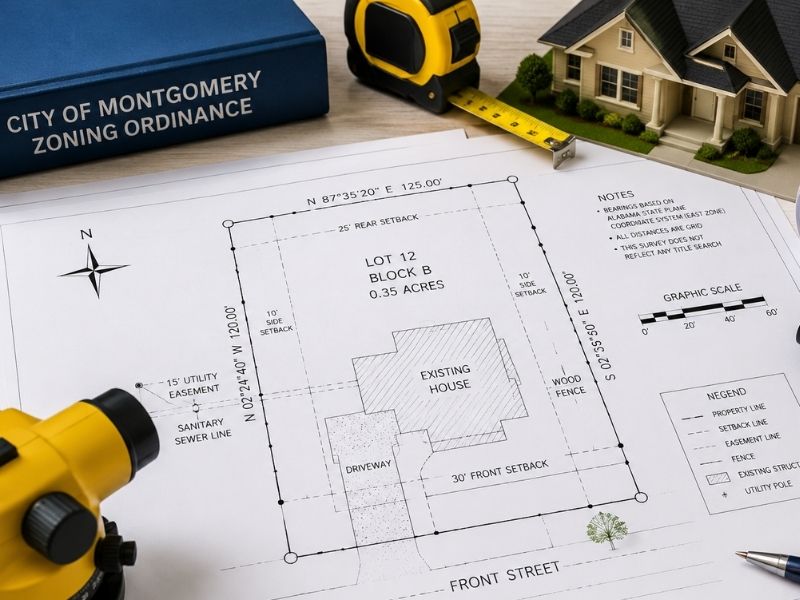
Property site plan showing a house on Lot 12, Block B (0.35 acres) with front and side setbacks and a driveway, plus a yellow measuring tape and a model house nearby for context of zoning.

You draw up the addition. The design looks clean. You file for the permit, and the reviewer sends it back over a setback you never saw. That delay stings, and a plat of survey would have caught it first. A plat of survey is the drawing that shows your lot’s real lines, dimensions and features on one page. For developers building in Montgomery, that page is an early warning system. Check the plat before you design, and you fix problems on paper instead of at the permit counter.

Setback Conflicts Hidden in an Otherwise Buildable Lot

A lot can look wide open and still fail on setbacks. Setbacks are the required gaps between your building and the property lines. The city sets them by zone, and they apply to additions, garages, decks and sheds. A plat shows your lines and dimensions, so you can measure the real buildable area.

Picture a back addition that fits the yard with room to spare. The rear setback might still cut into your plan by two feet. That gap kills the design as drawn. The plat lets you catch that conflict during design. You shrink the footprint or shift the location before a reviewer ever sees it.

Recorded Easements That Restrict the Proposed Building Area

An easement can block the exact spot where you want to build. It’s a recorded right that lets someone else use part of your land. The plat shows where these run, so you plan around them instead of into them. Several types show up on a typical lot:

  • Utility easements for power, water and sewer lines
  • Drainage easements that carry storm runoff
  • Access easements that give a neighbor a path
  • Shared driveway or parking rights

Build a garage over a utility easement and the reviewer stops you cold. The utility can also force you to tear it out later. The plat marks these strips clearly. You keep your new structure off them from the start.

Existing Improvements Positioned Too Close to Property Lines

The stuff already on your lot can cause permit problems too. A plat shows where your fences, sheds, driveways and structures actually sit. Sometimes those features sit right on a line, or across it. That’s an encroachment, and it can surface during review.

Maybe an old shed crosses onto the neighbor’s land. Maybe the driveway hugs the line with no clearance. These issues can stall a permit for new work nearby. Seeing them on the plat gives you time to plan a fix. You move the feature, correct the record or sort out an agreement before you file.

Lot Dimensions That Differ From Early Design Assumptions

Many site plans start with the wrong numbers. Designers pull dimensions from tax maps, old deeds or a quick tape measure in the yard. Those sources miss the mark often. A tax map is for assessing value, not for building.

A plat of survey gives you the true boundary dimensions, measured in the field. The real lot may run shorter or narrower than the early design assumed. Even a few feet changes what fits. Start the design on survey numbers and your plan matches the ground. Start on a guess and you redraw everything after the survey shows up.

Survey Details That Can Reduce Permit Plan Revisions

Every constraint you catch early is a revision you skip later. The plat puts setbacks, easements, existing features and true dimensions on one drawing. Your architect and contractor design around real limits from day one.

Set the order right. Get the plat first, then share it with the whole team before anyone finalizes the plan. Confirm the zoning setbacks for your parcel with the City of Montgomery. Line the design up against the plat, then file a set that already clears the obvious hurdles. Fewer surprises at review means fewer rounds of corrections. Your permit moves faster because the problems got solved before submission.

Frequently Asked Questions

What is a plat of survey?

It’s a scaled drawing of your lot that shows the boundary lines, dimensions, easements and existing improvements. A licensed surveyor measures the property and prepares it. Builders and owners use it to plan work and to check a design against real site limits.

How does a plat of survey help before a permit review?

It reveals setback conflicts, recorded easements, encroachments and true lot dimensions before you file. Catching those on the drawing lets you adjust the design early. That means fewer rejected plans and fewer rounds of corrections at the permit office.

Is a plat of survey the same as a tax map?

No. A tax map helps the county assess property value and shows only rough boundaries. A plat of survey comes from field measurements and shows exact dimensions and features. You should design and permit from the survey, not the tax map.

Will a plat show easements on my property?

It shows recorded easements that affect the lot, like utility, drainage and access rights. Those strips can block where you build. The surveyor plots them so you can keep new structures clear of them and avoid a permit holdup.

When should I get a plat of survey for a project in Montgomery?

Get it before design, not after. Early survey data lets your team plan around setbacks and easements from the start. Waiting until after you draw the plans often means redoing them once the real dimensions come in.

Posted in land surveying | Tagged Land Surveying, land surveyor montgomery

Post navigation

← Older posts
Newer posts →
Get Quote Button
© Boxer Survey USA
Montgomery Land Surveying
Montgomery, AL
Phone: (334) 625-9540

Web Development and SEO by:
AuburnBusiness.com, LLC


Privacy Policy | Terms of Use

The owner of this website, Boxer Survey USA, provides coordination of professional land surveying and engineering services in all 50 states. The professional surveying and engineering services provided to you will be conducted by fully licensed professionals in your state.

↑